AI can automate editing, but it shouldn't automate judgment. This project explores how I designed an editing workflow where AI accelerates tedious work while keeping creators in control of every decision.
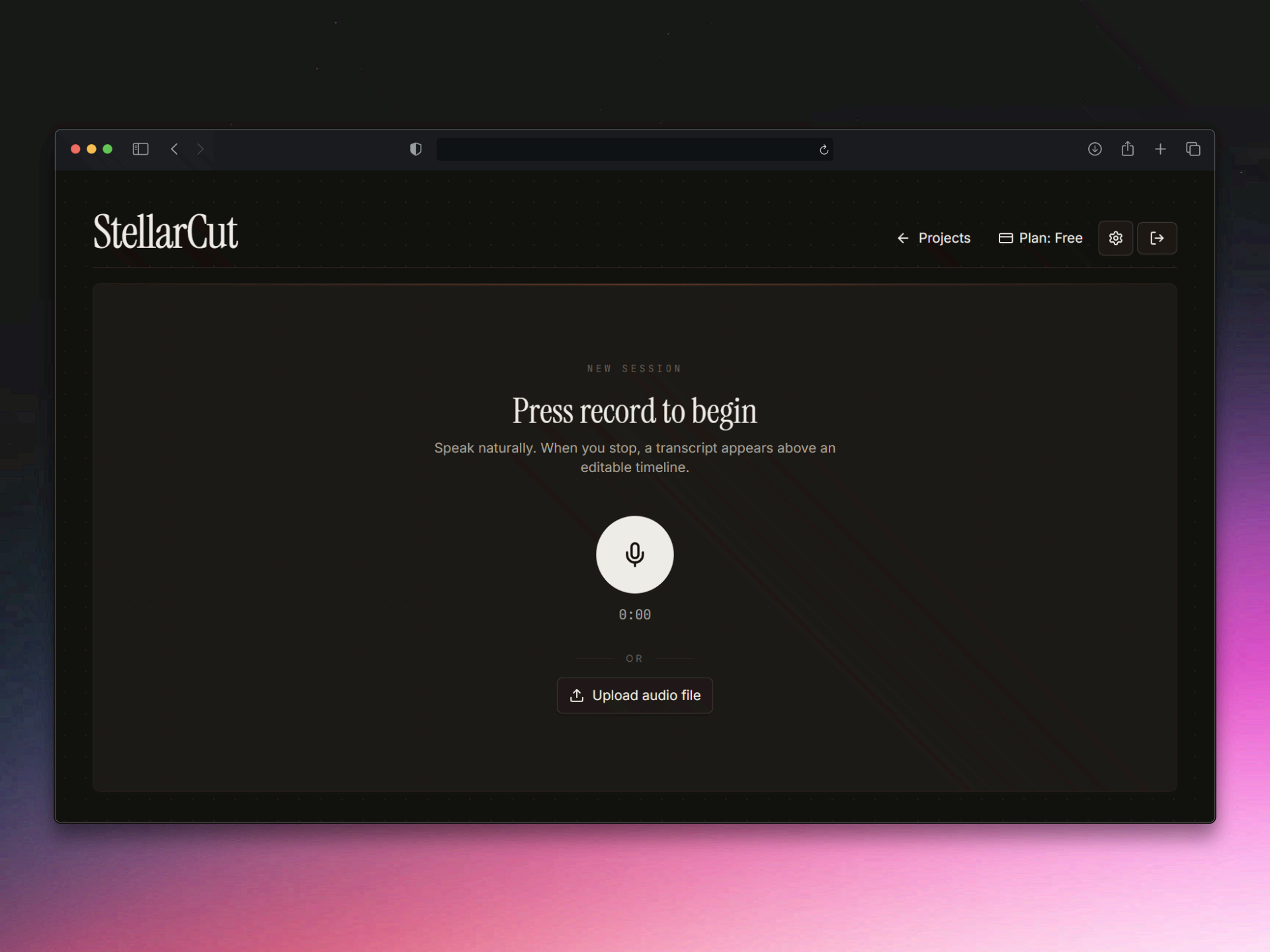
Creators spend hours making mechanical edits that add little creative value. Modern speech recognition enables transcript-based editing. But how do you automate repetitive work without making creators lose trust? To find out, I built and validated a working product in one week.
I owned the entire product lifecycle from opportunity identification and UX strategy to interface design, AI integration, front-end implementation, and post-launch iteration.
Which decisions belong to AI? Which decisions belong to humans? How do users maintain confidence after automation? How do transcript editing and waveform editing reinforce each other?
THE OPPORTUNITY
I record a lot of podcasts, audio for videos, and more. Noise, filler words, and awkward pauses were eating up my editing time. Every tool felt either too manual or too limited. With AI, I could validate my idea quickly.
Record (often with background noise)
Manually edit audio waveforms (tedious, imprecise)
Hope to have caught all the filler words and stumbles
The average audio editing experience is done exclusively with waveforms
DESIGNING THE HUMAN-AI WORKFLOW
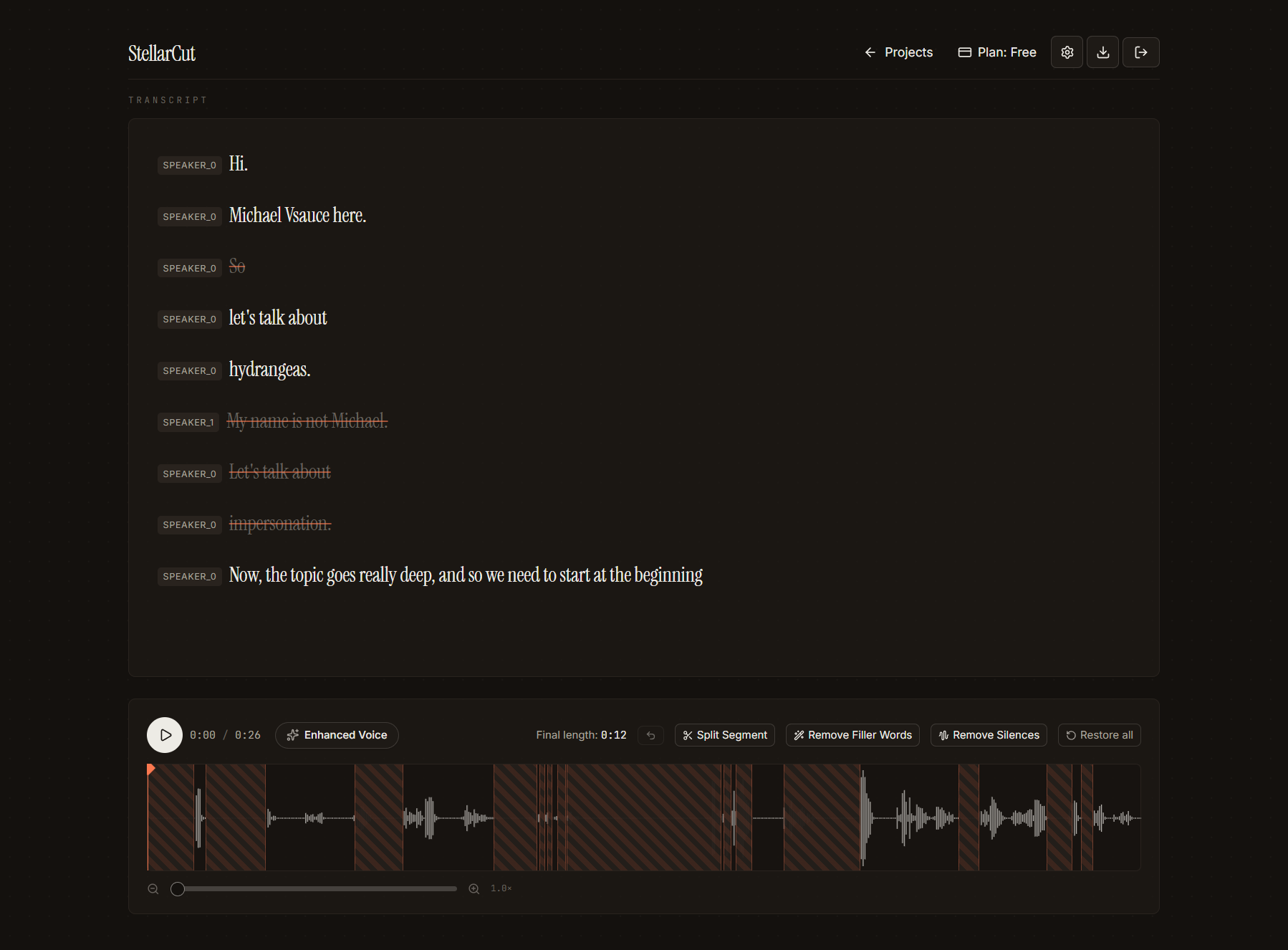
Automation speeds editing but never silently changes content.
People think in sentences, not audio peaks.
Every transcript change immediately reflects in the waveform.
Users can always verify edits visually before exporting.
THE BUILD
Instead of spending months hiring a team or building alone, I used Lovable.dev to scaffold the interface and manage the component structure, then integrated the ElevenLabs Speech-to-Text API for transcription.
Why This Matters for 2026: I rapidly validated that the core idea, a workflow using synced transcripts + waveform editing was actually valuable. In 2026, product designers who can quickly prototype, test, and iterate using AI tools are going to be the ones shipping real products.
MY EXPERIMENT
I didn't wait for perfect research or unlimited budget. I saw a gap, understood what tools were available, and shipped something useful in a week. That's the skillset 2026 demands.
Try StellarCutNOTE
For this project, I wanted to leverage AI in smart ways. It's often shoehorned it into everything. But StellarCut uses AI in a way where humans work alongside it to obtain transparent, automated outcomes. This leads to faster results, but also results leading to happy users.